Open Real Estate and the MLS: What Could Change for Buyers and Sellers?
RETURN TO BLOG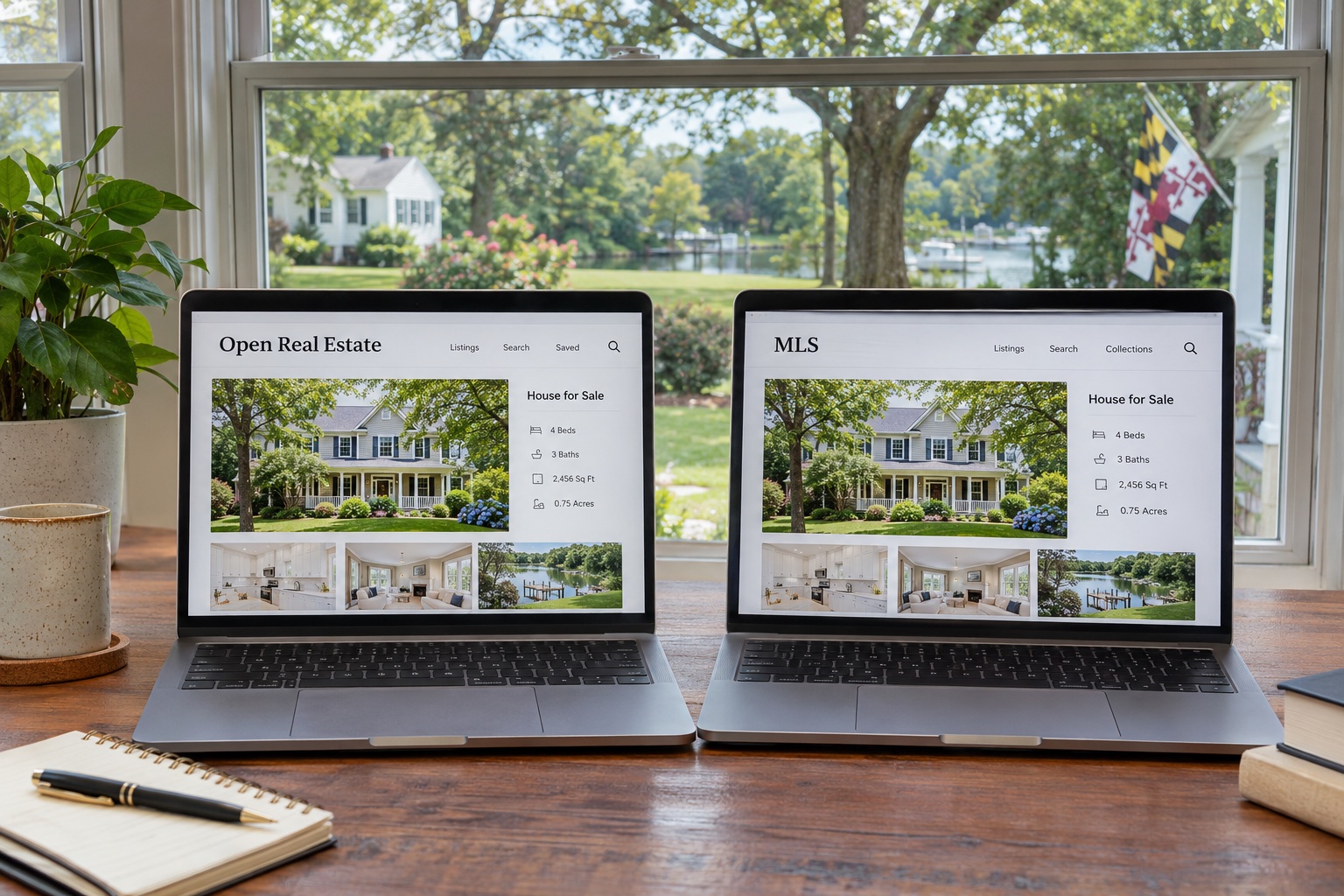
Four large real estate companies want to make it easier to send the same listing to multiple destinations. Here is what their national proposal could change, where your local MLS still matters, and what to ask before you click “contact an agent.”
The national news and where the project stands
On October 26, 2026, AGNT (whose brands include eXp Realty and NextHome), HomeServices of America, Keller Williams and Real REMAX Group announced Open Real Estate, or OpenRE. The founders propose a national repository of residential listing data that participating brokers could enter once and distribute to local multiple listing services, consumer portals and other authorized recipients. They describe it as infrastructure that works with local MLSs. Those MLSs would continue to govern their own markets. You may hear talk of a “national MLS.” The national part of this project is the proposed listing repository and distribution network. Founders’ announcement, October 26, 2026 · HousingWire’s national coverage, October 26, 2026
In its public FAQ, OpenRE says it is working with technology vendors through an RFP and expects that process to conclude in the first quarter of 2027. Some national coverage describes Q1 2027 as the targeted rollout. As of November 16, I found the public proposal, the FAQ and signs of industry interest. I could not verify a production feed for Calvert County, a consumer search site, or a live integration that lets a local broker enter and maintain a Bright MLS listing through OpenRE. A vendor milestone, a pilot and a working national network are three different things. OpenRE FAQ, checked November 16, 2026 · Inman’s interviews with the founders, October 26, 2026
The founders reported 826 letters of support on November 2, with a majority from independent brokerages. The same release includes supportive remarks from MLS leaders, including Bright MLS CEO Brian Donnellan, who expressed interest in working with the initiative. That matters in Southern Maryland, where Bright serves the local market. A letter or statement measures interest. For buyers and sellers, the more useful milestones will be signed integrations, the listings available through them, and what consumers can actually see and do. OpenRE progress release, November 2, 2026 · Inman’s national follow-up, November 2, 2026
How listings reach you today, and what OpenRE proposes
A brokerage takes a listing under an agreement with the seller and supervises its agents. An MLS is a cooperative marketplace where participating brokers share listings using common fields and rules for submitting, updating and displaying them. In Southern Maryland, Bright MLS is the regional example. A broker website can display eligible listings under an Internet Data Exchange (IDX) agreement. A consumer portal may obtain listings from MLS feeds, broker feeds or other sources and build its own public search, alerts, maps and inquiry tools. A REALTOR® is a member subject to the National Association of REALTORS® Code of Ethics. Maryland license law governs Maryland licensees regardless of membership. NAR listing options policy, effective March 25, 2025 · 2026 Code of Ethics
Under the published OpenRE proposal, a participating listing broker would submit a property within one business day after the listing agreement is executed, through OpenRE or a connected MLS input. The FAQ describes participant-only visibility and a market option for broader distribution. The FAQ says participant-view listings cannot be publicly marketed and OpenRE would determine syndication destinations for its database. The project therefore distinguishes submission from public exposure. A record could be in a national database while a buyer outside the participating network still cannot see it. Local MLS filing, public marketing and exemption requirements would still matter. A broker should verify the rules of each service before assuming that entering a record in one place satisfies another service’s deadline. OpenRE proposed participation rules · NVAR’s Bright policy briefing, September 30, 2026
| Who | Today’s MLS and portal ecosystem | Potential OpenRE impact | Practical test |
|---|---|---|---|
| Listing agents | Manage the listing, media and status, with exposure through eligible feeds. Inquiry routing varies by site. | Less re-entry and potentially wider distribution if receiving systems connect. | How quickly do corrections reach every outlet, and can the buyer clearly reach the listing office? |
| Cooperating brokers and buyer’s agents | Use MLS search, records and cooperation tools. Agents separately establish whom they represent and how they are paid. | Potentially easier cross-market discovery, especially near service boundaries. | Can independent firms access the same listings at the same time, with enough detail to advise a client? |
| Brokerages and MLSs | Maintain feeds, permissions and local rules. Multi-market firms may manage several integrations. | Common input and distribution could simplify integrations. A new intermediary also creates a new dependency. | Who sets terms, resolves errors and authorizes export? Can a small firm exit or switch vendors easily? |
| Sellers | Choose a marketing plan with their broker, subject to local rules and signed instructions. | More routes to market if feeds are adopted, with a proposed restricted option for some listings. | Which buyers can see the home on each date, and which restrictions actually follow it downstream? |
| Buyers | Search consumer sites or use an agent’s MLS tools. A public inquiry may go to the listing office, an advertiser or a matching service. | More consistent inventory across tools is possible if participation is broad and updates propagate. | Can I see accurate status, tell whom I’m contacting, and choose my own representation? |
One regional MLS here, two or three in some markets
Here in Calvert County and across much of the Maryland, D.C. and Northern Virginia market, we work in one shared regional system, Bright MLS. That makes a search across much of the DMV fairly straightforward. Bright also covers Maryland’s Eastern Shore. The Coastal Association of REALTORS® serves Somerset, Wicomico and Worcester counties and uses Bright data for its local market reports. The separate Eastern Shore MLS I could verify is farther south, on Virginia’s Eastern Shore. It is run by the Eastern Shore Association of REALTORS® and serves Accomack and Northampton counties. Bright MLS regional map · Maryland Coastal Association market reports · Eastern Shore of Virginia MLS and public search
Elsewhere, a broker working across a metro area or along a service boundary may need to check two or three MLSs. Metro Atlanta has First Multiple Listing Service and Georgia MLS, both serving the Atlanta area. Those are the markets where I see the most practical potential in OpenRE. If multiple MLSs accept the same input and synchronize updates, a listing agent could make a price change once, a buyer’s agent could spend less time reconciling separate searches, and a seller could reach more buyers across service boundaries. The gains depend on which systems connect, what their agreements allow and whether buyers and their agents can see the same current information. Atlanta brokerage’s account of listing in both MLSs · OpenRE FAQ
Better distribution has real upside and real tradeoffs
Discoverability. A home near the Patuxent River might appeal to buyers searching by commute, by county or from out of state. Fewer disconnected feeds could help those buyers find it. The benefit depends on which firms contribute, which MLSs and portals connect, and which listings go to the market view. A participant-only option could create a wider private audience than a single office while still leaving some buyers and their agents out. For a seller who values privacy, discuss what narrower exposure could mean for buyer competition and how long the restriction will last.
Accuracy. One input can reduce conflicting versions of a property’s price or status. It also makes it easier for a single incorrect field to spread widely. A Calvert County home advertised as having four bedrooms raises different questions if the septic permit describes a three-bedroom system. A new feed does little to resolve that discrepancy without source records, clear definitions, a correction process and a way for updates to reach downstream sites. A useful integration would show the source, the last update and which record controls when two systems disagree.
Data control and portability. In interviews, the founders described broker ownership and equal per-listing sharing if the network monetizes listing data. Those are project design statements. In practice, ownership, licensing and control are different questions. A photographer’s license may limit where photos can be used. A broker may be allowed to export fields while lacking the right to transfer the corresponding photos or public display rights. Before relying on portability, look for written rules on withdrawal, reuse, exports, fees, historical records, correction deadlines and revoking access. Revenue from licensing a record is a different transaction from paying for a buyer inquiry or paying a broker to represent a client. OpenRE FAQ · HousingWire reporting on the proposed revenue model, October 26, 2026
Privacy. Listing distribution and consumer inquiry data should be evaluated separately. Sellers can ask where interior photos, address details and price history will appear, and what removing a listing will do to copies already shared. Buyers can ask who receives their name and phone number when they click and whether they are consenting to calls or texts from another firm. Showing instructions, access codes, proof of funds and other sensitive information belong in appropriately restricted channels. Even a correctly transmitted removal request may leave cached copies or licensed archives. Ask each receiving platform what it can remove. Zillow privacy policy as one portal example · NVAR’s Bright policy briefing
Who gets the call when someone clicks?
Portals can help sellers reach people who would never have found a broker’s website, and a portal introduction can lead to a capable buyer’s agent. Some portals also make money by charging agents for advertising or connections. Zillow, for example, documents a Premier Agent advertising model linked to share of voice in a shopper’s preferred ZIP code, and a Preferred program using performance-based routing and ZIP preferences with a success fee when a referred transaction closes. A ZIP preference helps route an inquiry. It tells a shopper very little by itself about an individual agent’s qualifications or experience with that property type. Actual routing depends on the product, the site and the button. Zillow Premier Agent FAQ · Zillow Preferred FAQ
I spend money on professional photography and marketing so buyers can learn about the home my client hired me to sell. It can be frustrating when a portal uses that listing to generate a paid introduction to an agent outside the listing brokerage and the buyer thought they had reached me. I’d like buyers to have a clearly labeled way to reach the listing agent for a factual question about a particular property. I’d also like the option to find independent buyer representation to be just as clear.
When a buyer contacts me about my listing, I promptly tell them I represent the seller. I can answer factual questions within that role, check what documentation is available and be clear about what still needs verification. If the buyer is interested in moving forward, I encourage them to obtain their own buyer representation before doing so. If they already have an agent, I respect that relationship and work with their agent to get the information they need. A question about a property and advice about what to offer are very different conversations.
Maryland agency, buyer agreements and compensation
Maryland requires a seller’s agent whose first contact with a prospective buyer is remote to disclose the seller relationship in that same medium. That can mean saying it on the initial phone call or stating it in a reply by email or message. The written disclosure generally comes no later than the first scheduled face-to-face contact where the statute applies. At a public open house, a conspicuously displayed Commission notice can satisfy the statutory disclosure requirement. The statute contains exceptions, including for a party with whom the broker has entered a written brokerage agreement. The Commission’s disclosure form explains the roles. Receiving that form establishes awareness of the role and is separate from hiring a broker. Maryland §17-530 · Maryland Real Estate Commission disclosure form
A Maryland buyer’s agent represents the buyer under a written brokerage agreement. Arrange and sign that agreement before receiving buyer representation services. Review the work the broker will do, the term, any exclusivity, how to terminate and what you could owe. A seller’s agent owes client duties to the seller and owes fair and honest treatment and applicable disclosure duties to other parties. Limited factual assistance or ministerial acts must fit Maryland law, including applicable client consent, and preserve client duties. I can discuss documented property facts. Advice on your offer price, contingencies, bargaining position or what to share with the seller belongs with your own representative. Maryland permits dual agency under defined conditions, including informed written consent and separate intra-company agents assigned by the qualifying broker or designated branch manager. A portal inquiry does not establish it. Maryland §17-528 · §17-532 · §17-534 · §17-530.1
Under the NAR settlement practice changes in effect since August 17, 2024, a covered MLS participant working with a buyer needs a written agreement before an in-person or live virtual home tour. The NAR rule treats a listing agent providing access solely for the seller differently, and Maryland disclosure still applies. Covered MLSs cannot display offers of broker compensation. Permitted compensation arrangements can be negotiated off the MLS, subject to applicable rules and approvals. The buyer broker’s compensation in a covered agreement must be objectively ascertainable and cannot exceed the agreed amount or rate from any source. Fees are negotiable. Ask about the potential out-of-pocket amount early, and distinguish a proposed seller concession from a buyer-broker payment. A listing feed by itself changes none of these responsibilities. NAR settlement FAQs · NAR consumer guide
Fair access and two kinds of steering
Federal fair housing rules prohibit restricting housing choices or discouraging a buyer from a neighborhood based on protected characteristics. Maryland also has its own fair housing protections. REALTOR® ethics separately address equal professional service, truthful advertising, client interests and respect for exclusive relationships. Neither a limited feed nor a public feed guarantees fair access. Watch how listings are advertised, who receives invitations to see them, how inquiry buttons are labeled, and whether accommodations and information are handled consistently. A buyer’s own criteria, such as a maximum commute or accessibility needs, should guide the search. Federal anti-steering rule · Maryland housing discrimination statute · 2026 Code, Articles 1, 10, 12 and 16
Compensation-based steering is a separate concern. A buyer’s agent should present suitable homes based on the buyer’s criteria, regardless of what the agent might earn. A portal’s paid agent matching raises a related transparency question about how a recommendation is ranked and disclosed. The legal treatment depends on the payment and the service. Federal RESPA rules, for example, address kickbacks and unearned fees for covered settlement service referrals and recognize certain cooperative brokerage and referral arrangements between real estate agents and brokers. A portal advertising charge, a brokerage referral fee and an unlawful kickback are distinct. NAR practice guidance, February 2025 · CFPB Regulation X, §1024.14
What others are saying
- The founders, October 26. Their argument is that standardized input and shared distribution can protect broad buyer access while giving sellers control over marketing. Their case depends on participation and follow-through on interoperability. Read the original announcement.
- MLS executives, early November. Bright welcomed collaboration in the project’s November 2 release. HousingWire’s reporting also explores the sensitivity of listing control and the distinction between modernizing data entry and replacing local governance. Read HousingWire’s interviews.
- An independent brokerage’s questions, October 29. Howard Hanna CEO Hoby Hanna told Real Estate News that his company already invested in its own single-entry technology and questioned whether an initiative with many stakeholders could get to launch efficiently. That is a practical challenge for any shared network. Read the original interview.
- Compass and Zillow, late October and early November. HousingWire reported that both welcomed aspects of the proposal. Compass emphasized seller and listing-agent control. Zillow stressed broad consumer visibility. Compass’s CEO subsequently left open the possibility of joining. Each has an interest in how listings are distributed, and support is distinct from a confirmed feed or membership agreement. Read the reported responses · Read the November 5 follow-up.
- National context, February 27 and November 9. The Associated Press reported on a separate Compass–Redfin arrangement for visibility before broad MLS exposure. Real Estate News later reported NAR approvals concerning local MLS discretion and data policy. These are separate developments. Together they show why the same property can have different visibility across markets and sites. Associated Press coverage · Real Estate News coverage.
Frequently asked questions
- Is Open Real Estate a national MLS?
- It is a national listing-data initiative. The founders propose a repository that feeds existing MLSs and other authorized services. They describe local MLSs as continuing to run their own markets.
- Will I find every home there?
- Coverage will depend on participation, visibility choices and integrations. The founders describe a distribution service for businesses, and I found no live comprehensive public search as of November 16, 2026.
- Will OpenRE make the listing agent the default contact?
- No such guarantee was verified. The outlet displaying the listing determines how its inquiry buttons work, subject to its agreements and applicable rules.
- Should I sign a buyer agreement to ask about a listing?
- A basic factual inquiry to the seller’s agent is distinct from receiving buyer representation or touring with an MLS participant working for you. Maryland’s agency disclosures and written brokerage requirements apply according to the role and service.
- Will the proposal change commissions or end portal referrals?
- The public proposal concerns distribution and potential listing-data revenue. Brokerage fees remain negotiable, and portal referral and advertising models are separate.
- What would be a convincing sign of progress in Maryland?
- A confirmed local integration, published participation and data terms, and examples that show how quickly a price correction, status update or withdrawal reaches each destination.
About Dawn Riley
Dawn Riley is an Associate Broker and REALTOR® with The Riley Team at Deep Roots Real Estate in Huntingtown, Maryland.