The Waterfront Questions Every Southern Maryland Seller Should Ask, and My Answers
RETURN TO BLOG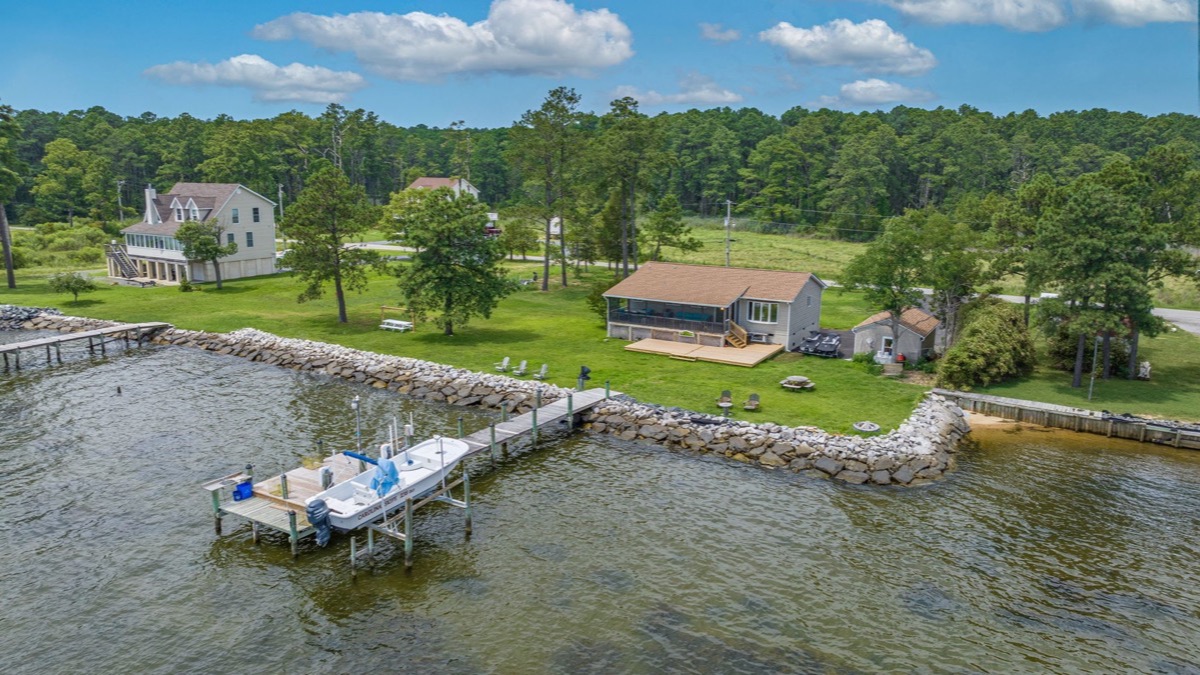
I told waterfront sellers what to ask an agent. Here is every one of those questions answered by me, in writing.
I wrote a guide telling Southern Maryland sellers what to ask a waterfront agent. Publishing that and then not answering any of it myself seemed like a bad look.
So here is the whole list with my answers. Under each one I put what a dodge sounds like, because on waterfront the difference between an agent who knows and an agent who is enthusiastic is usually audible within about two questions.
Where I am coming from.
- Nearly 100 Maryland waterfront sales, and more than 40 years living in Calvert County and on the water
- 1,338+ homes sold, $532,653,786+ in career volume, sold-to-list over 101%
- Top 1% of Realtors nationwide, calculated against median member transaction volume published by the National Association of Realtors
- MCNE, one of five negotiation designations, and PSA, plus negotiations coursework at Yale, Northwestern, UVA, Columbia and UC Davis
- Maryland Associate Broker, license 531668. Verify it here.
Production figures come from Bright MLS career production records, including data migrated from predecessor MLS systems. Past performance does not guarantee a specific result for any individual property.
The waterfront questions, and my answers
"How many waterfront properties have you sold, and on which water?"
Nearly 100 across my career, and I have lived in Calvert County and along the water for more than 40 years. That second part matters more than people assume, because the differences here are local down to the creek.
The Bay is not the Patuxent. The Patuxent is not a protected creek off St. Leonard. Exposure, wind, boat traffic, depth and what a pier can be permitted to do all change from one to the next, and pricing them the same way produces confident nonsense.
All the examples come from one narrow slice of water, or from ten years ago. Both the rules and the buyers have moved since.
"How do you price the water separately from the house?"
As separate line items, because that is how buyers actually value it.
Lot orientation and what you look at. Whether the shoreline is usable or a bank nobody can get down. Water depth at the pier at mean low water, not at whatever moment I happened to stand on it. Pier condition and whether the lift works. Privacy from the neighbors. Flood exposure and what insurance is likely to cost. Then the house.
Two homes with identical square footage a mile apart can be a quarter million dollars apart, and none of that gap is explained by the kitchens.
Price per square foot, or comparables pulled by radius. A one mile circle around your house is full of properties with nothing in common with it.
"Will you advertise deep water, navigable or permitted pier?"
Only if I can show you the paper. Those are material claims, not adjectives.
If a buyer spends money on inspections and a survey and then finds out the pier was never permitted, that is not an awkward moment. That is a legal problem, and it is your legal problem more than mine. So I go find the records first. If I cannot verify it, it does not go in the listing, even when the previous owner is completely certain.
"It has been there thirty years, it is fine." Age is not a permit and neither is the absence of complaints.
"What do I need to know about the Critical Area?"
That most tidal waterfront in Calvert County is inside it, and that your buyer is going to ask.
In practice it governs the buffer near the water, what vegetation can come out, how much of your lot can be covered by impervious surface, and what mitigation is required to change any of that. Which lands directly on the buyer who is standing in your yard mentally building a pool, an addition, a bigger deck or a pole barn.
I can explain the framework and I can tell you where to get a real answer. What I will not do is tell you what your buyer can build, because nobody knows that without the county reviewing the actual parcel.
A confident answer about what can be built. That agent is guessing with your liability.
"What about flood zone and insurance?"
I want it settled before we list, not during a buyer's financing.
Flood zone from the FEMA Flood Map Service Center, the elevation certificate if one exists, and a realistic sense of what a buyer will pay for coverage. Because insurance cost is part of what your buyer can afford, which means it is part of your price whether anyone acknowledges it or not.
Handing a buyer this information up front is far better than having them discover it in week three and use it on you.
Nobody mentions flood insurance until the buyer's lender does.
"What are you going to check on the pier?"
Permits and approvals first. Then pilings, decking, and any electrical or water service running out there. Lift capacity and whether it actually operates. Depth at the end at mean low water. Whether the shoreline is stable, eroding, or has living shoreline or bulkhead work, and whether that work was permitted.
And somebody walks it with a flashlight, which sounds obvious and frequently does not happen. Marine construction is specialized, expensive and slow to permit, so a pier problem found during the buyer's inspection is a large negotiation rather than a small one.
The pier is described in the listing copy and nobody has been on it.
"Is my septic going to be a problem?"
On waterfront it deserves a look every time. These lots are frequently constrained and the systems are frequently older.
I want the permitted bedroom capacity, where the reserve area sits, and a realistic view of what replacement would involve on a lot with a buffer and setbacks. The expensive mistake is advertising four bedrooms on a three bedroom septic permit, which is a correction you very much want to make before the listing goes live.
The bedroom count came off the tax record and nobody compared it to the septic permit.
"How will you actually market it?"
Drone from above and from the water, so a buyer scrolling on a phone immediately understands how the house, the shoreline and the pier relate to each other. Stills shot when the light on the water is right, which is a narrow window and not the middle of the day.
Copy that is specific and verified. Orientation, what you genuinely see, what the access actually is. Waterfront buyers are sophisticated and vague superlatives make them suspicious, which is the opposite of what you are paying for.
Interior photos and one aerial shot at noon in flat light. Somebody bought the cheap package for an expensive house.
"What is on my title that could slow this down?"
I pull your deed before we list, and on waterfront there is usually more to find.
Riparian rights, easements, shared pier or shared access agreements, access strips, and old boundary questions all live on the title. Every one of them is easier to sort out in the weeks before listing than during a thirty day settlement with a buyer waiting and a moving truck booked.
"Title will catch that." They will, once you are under contract, which is exactly the wrong time.
"Am I going to get surprised on taxes at closing?"
Waterfront owners are often second-home owners, investors, or people who moved away years ago, and all three of those have tax consequences with deadlines that hit before closing.
If you are not a Maryland resident, Maryland withholds tax from your proceeds at settlement. As of 2026 that is 8.75% of the total payment for individuals, estates and trusts, and 8.25% for business entities such as LLCs, corporations and partnerships. A reduced withholding can be requested on Form MW506AE, filed at least 21 days before closing. I broke the whole thing down on Maryland nonresident seller withholding. If this is an investment property and you want a 1031 exchange, it has to be set up before you close. After is permanently too late.
I am not a CPA and will not act like one. I raise both at the first meeting and send you to your accountant while there is still time to do something.
Never heard of it, or a confident answer about your taxes from someone with no license to give one.
Three things I do that most agents do not
1. I have the credentials, not just the affection for the view
Every agent loves your water. That is a normal human response, not a qualification. MCNE from the Real Estate Negotiation Institute, one of five negotiation designations I hold. PSA from the National Association of Realtors. Negotiations coursework at Yale, Northwestern, UVA, Columbia and UC Davis. Associate Broker rather than a salesperson license. Waterfront contracts have more moving parts and more places to lose money, and I wanted to be trained for that instead of improvising.
Designations come from named organizations and can be confirmed. My license is 531668, public at the Maryland Department of Labor. Check every agent you interview.
2. I pull your deed before we list
Especially on the water, where riparian rights, shared pier agreements and access easements turn up regularly. Finding them early is paperwork. Finding them during settlement is a crisis with a deadline.
Ask your agent to pull the deed and tell you what they found. If that happens later in their process, you have learned something useful.
3. I raise 1031 and nonresident withholding at the first meeting
Both have deadlines that land before closing and neither can be fixed afterward. I cannot advise you on either one, and I can absolutely make sure you know they exist while there is still runway to act.
If you live out of state or this is an investment property, raise it at the first appointment, then call your own tax professional.
Take this to somebody else too
Bring this page to two other waterfront listing appointments. If another agent answers it better than I did, hire them. I mean that, and I would rather you sell well than sell with me.
What I am sure of is that these are the right questions, and that most waterfront sellers are never told to ask them.
Let's walk your shoreline
I will look at the pier, pull your deed, check the flood and Critical Area picture, read the septic capacity and give you a supported range with the evidence attached. Plus what would move the top of that range before we list.
Schedule a waterfront consultation
Call or text 410-414-2438 or email dawn@dawnriley.net. Calvert, St. Mary's, Charles and Anne Arundel counties.
Necessary disclaimer. Nothing on this page is tax, legal, engineering or insurance advice. Critical Area rules, flood maps, pier permitting, septic capacity and Maryland nonresident withholding all change, and what applies to your parcel depends on facts specific to it. Confirm Critical Area and permitting questions with Calvert County or the appropriate county office, flood information through the FEMA Flood Map Service Center, and tax questions with the Comptroller of Maryland and your own CPA.
Frequently Asked Questions
Nearly 100 Maryland waterfront sales across her career, and she has lived in Calvert County and along the water for more than 40 years. That local depth matters because the differences here run creek by creek. The Bay is not the Patuxent, and the Patuxent is not a protected creek off St. Leonard.
As separate line items rather than one number. Lot orientation and view, whether the shoreline is usable, water depth at the pier at mean low water, pier condition and lift, privacy, flood exposure and likely insurance cost, and then the house. Two homes with identical square footage a mile apart can be a quarter million dollars apart, and none of that gap is the kitchens.
Only with documentation. Those are material claims, not adjectives. If a buyer spends money on inspections and a survey and then learns the pier was never permitted, that becomes a legal problem for the seller. If it cannot be verified it does not go in the listing, even when the previous owner is certain.
Most tidal waterfront in Calvert County sits inside it, and buyers ask about it. It governs the buffer near the water, what vegetation can be removed, how much of the lot can be impervious, and what mitigation is required to change any of that. No agent can tell a buyer what they may build. That answer comes from the county reviewing the specific parcel.
Before listing. Flood zone from the FEMA Flood Map Service Center, the elevation certificate if one exists, and a realistic estimate of what a buyer will pay for coverage. Insurance cost is part of what a buyer can afford, which makes it part of the price. Handing a buyer that information up front beats having them discover it in week three and renegotiate.
Permits and approvals, pilings, decking, any electrical or water service, lift capacity and whether it works, depth at the end at mean low water, and whether the shoreline is stable, eroding or carries permitted bulkhead or living shoreline work. Somebody should physically walk it. Marine construction is slow to permit and expensive, so a pier issue found during a buyer's inspection is a large negotiation.
The lots are frequently constrained and the systems frequently older. Permitted bedroom capacity, the location of the reserve area, and whether replacement is practical on a lot with a buffer and setbacks all matter. The expensive mistake is advertising four bedrooms on a three bedroom septic permit, which should be corrected before the listing goes live.
Riparian rights, easements, shared pier or shared access agreements, access strips and old boundary questions. Dawn pulls the deed before listing rather than after going under contract, because all of those are manageable in the weeks before a listing and painful during a thirty day settlement.
As of 2026 Maryland withholds 8.75% of the total payment from nonresident individuals, estates and trusts at settlement, and 8.25% from business entities such as LLCs, corporations and partnerships. A reduced withholding can be requested on Form MW506AE, which must be filed at least 21 days before closing. A 1031 exchange on an investment property must be set up before closing, never after. Dawn raises both at the first meeting and refers sellers to their own CPA. Verify current requirements with the Comptroller of Maryland.
Yes, and that is the point. Take the page to two other waterfront listing appointments and compare the answers. The questions are the right questions regardless of who ends up getting the listing.
About Dawn Riley

Dawn Riley is an Associate Broker, Realtor, Master Certified Negotiation Expert (MCNE) and Pricing Strategy Advisor (PSA) with The Riley Team at Deep Roots Real Estate in Huntingtown, Maryland. She holds Maryland license 531668, has been licensed since 2000, and has more than 25 years of real estate experience. She was named Rookie of the Year in 2001 by both the Southern Maryland Association of Realtors and Long & Foster, and has additional negotiations coursework from Yale, Northwestern, UVA, Columbia and UC Davis. Dawn combines strategic pricing, advanced property marketing and detailed Maryland contract knowledge to represent buyers and sellers throughout Calvert County and Southern Maryland.
Career results as of 2026: 1,338+ homes sold, $532,653,786+ in sales volume and average sold-to-list price statistics over 101%, per Bright MLS career production records, including data migrated from predecessor MLS systems. Production places her in the top 1% of Realtors nationwide, calculated against median member transaction volume published by the National Association of Realtors. Past performance does not guarantee a specific result for any individual property.
Dawn Riley
Associate Broker, Realtor, MCNE, PSA | MD License 531668
The Riley Team at Deep Roots Real Estate
2425 Solomons Island Rd., Suite C, Huntingtown, MD 20639
410-414-2438
dawn@dawnriley.net
Schedule a consultation