Radon testing deserves more than a number
RETURN TO BLOG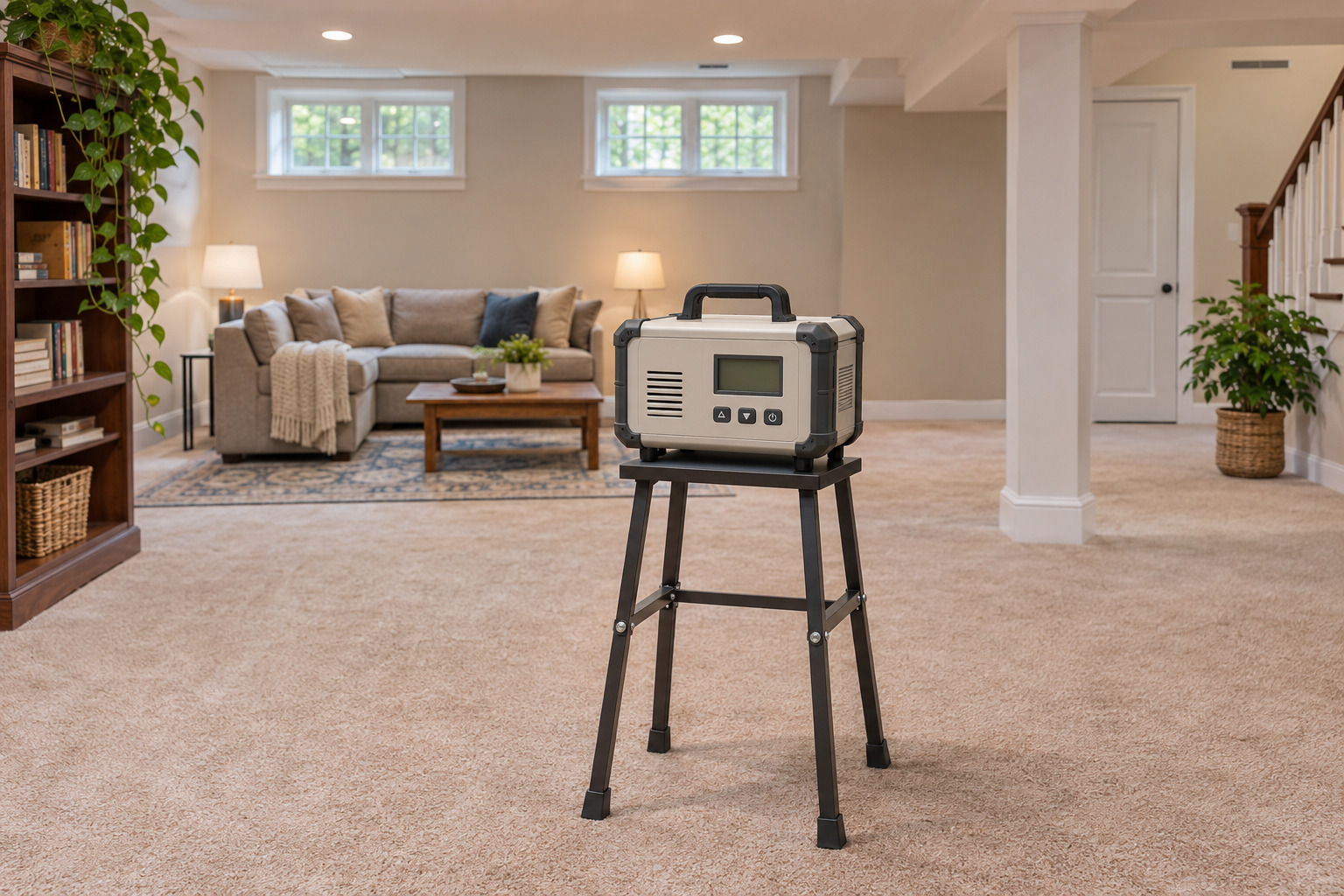
I strongly recommend radon testing to every buyer. What I do not recommend is paying several hundred dollars for a professional service and then being unable to get a straight answer about how the test was performed.
Here is one of my inspection pet peeves. I have encountered inspectors using consumer electronic radon detectors purchased online, including from Amazon, and presenting the result on their own letterhead. When I ask for the latest calibration documentation, some tell me the device has never been calibrated. That is when I start asking more questions.
A nice letterhead does not answer those questions. Neither does the price of the test. As a Realtor working in Calvert County, Maryland, I want my clients to understand what they are paying for and what evidence supports the result.
Electronic equipment is not the problem
A properly selected and operated continuous radon monitor can provide a legitimate professional result. It does not need to send a physical sample to a separate laboratory after every home test. Passive devices, such as many charcoal kits, follow a different process and are sent for analysis. EPA explains both approaches in its buyer and seller guide. [1]
Buying equipment online does not automatically make it unsuitable. And an inspector can properly issue a report on company letterhead. My concern is whether the device, operator and procedure are appropriate for this particular real estate test. I want the supporting records, not an argument about where the monitor was purchased.
Maryland rules and EPA guidance are different things
EPA recommends testing homes, but its residential guidance is not a blanket federal law requiring every sale to include a radon test. EPA identifies current ANSI/AARST voluntary consensus standards, including MAH-2023 for measurements in homes. Local laws, program rules and the purchase contract can add requirements. [2]
Montgomery County has a specific pre-sale testing requirement for covered detached homes and townhomes, with exemptions. Its guide says the test must be no more than one year old and may be performed by a seller, buyer or qualified third party using an approved device. That is not the same as saying every Maryland sale has identical requirements. [3]
I would not rely on the shorthand that only Montgomery County has rules. Confirm the property's county and municipality, any applicable program requirements, and the contract. For a Calvert County purchase, I still recommend testing rather than treating the absence of a particular mandate as reassurance about the house.
Placement matters down to inches
Ask the tester to identify the current standard and manufacturer instructions being followed. EPA's buyer and seller guide places a short-term device at least 20 inches above the floor, undisturbed and away from drafts, excessive heat, humidity and exterior walls. [1]
For context, EPA's published monitoring-plan example, drawing on its older measurement protocols, specifies at least 3 feet from exterior windows or other openings, 1 foot from exterior walls without openings, and 4 inches from other objects. These are protocol-specific distances, not a universal rule of several feet from every wall. Current professional standards and the particular device's instructions must be checked for the actual setup. [4]
A convenient shelf is not necessarily a suitable test location. I would ask for a location photograph and a written explanation if placement looks questionable, rather than moving the device myself.
The house has to cooperate too
For a short-term test lasting less than four days, EPA calls for closed-house conditions beginning at least 12 hours beforehand and continuing through the test, with normal entry and exit permitted. Its real estate guidance includes a continuous-monitor test of at least 48 hours. Opening windows to freshen the basement can undermine the test. Follow the tester's written instructions, and report any disturbance. [1]
This is a good reason to coordinate with everyone entering the home. Showings, contractors and occupants should all know a test is underway. I would much rather discuss the instructions before setup than discover a problem when everyone is counting down to settlement.
Ask for the certificate for that instrument
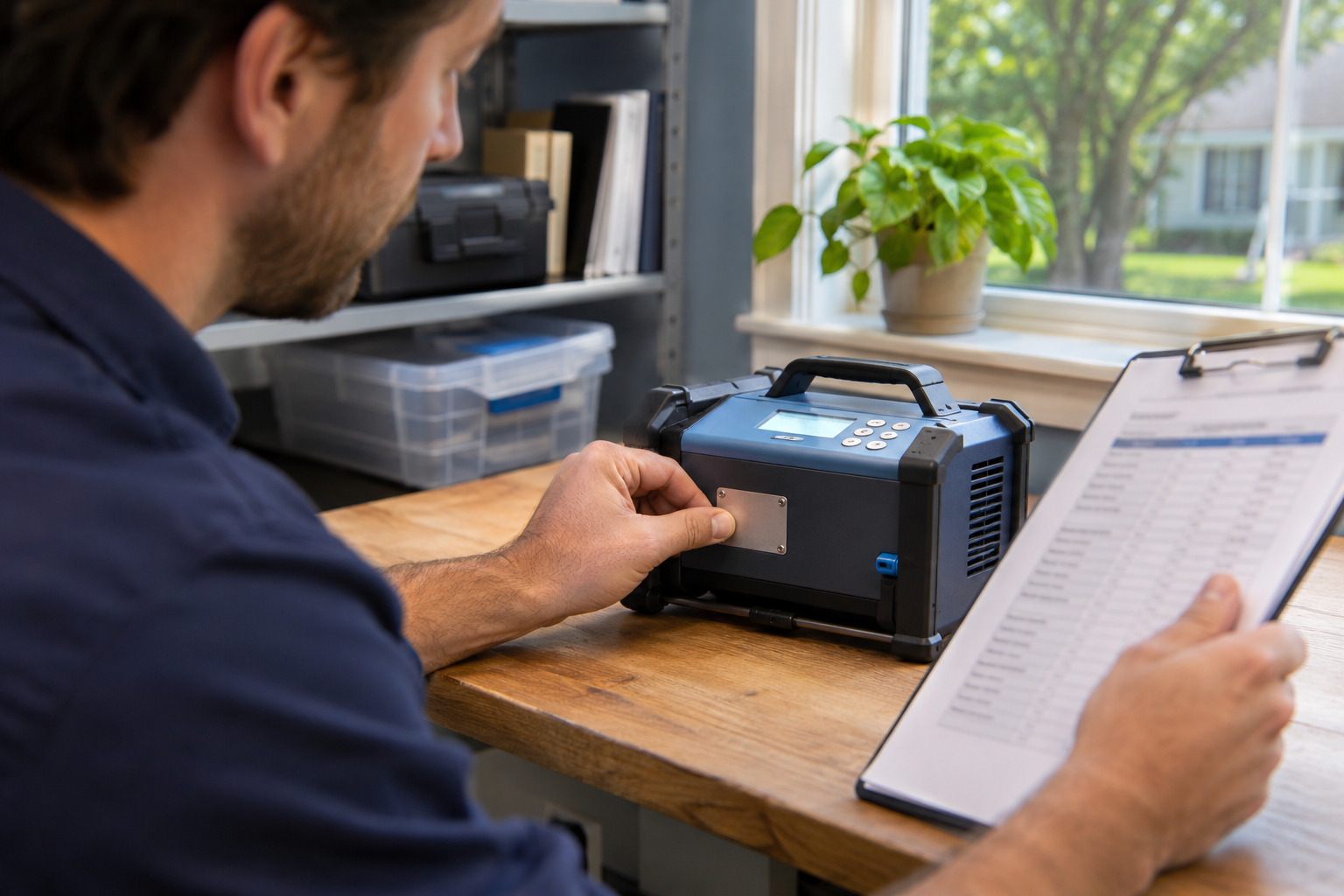
NRPP requires annual calibration for every analytical device registered under its certification program. Its required proof identifies the manufacturer, model, serial number, calibration date, facility and results. Ask for the certificate matching the instrument used in your home, not just a certificate for another monitor the company owns. [5]
That is a professional certification requirement, not a claim that every household consumer monitor is governed by the same legal rule. A home inspector's general license is also different from a radon measurement credential. Maryland's Department of the Environment links consumers to NRPP and NRSB provider directories, which offer a practical place to check qualifications. [6]
Questions I want answered before the test
- Who will perform the test, and how can I verify their radon measurement credentials?
- Which device and serial number will be used, and is it appropriate for a real estate measurement?
- Can you provide current calibration evidence for that instrument and explain your quality controls?
- Which testing standard governs the placement, duration and closed-house instructions?
- Will the report identify the test location, start and stop times, device and any irregularities?
- If this is a passive kit, which qualified laboratory analyzes it, and will I receive its report?
Questions buyers ask me
I would not. Maryland's radon guidance recommends testing, and a regional map cannot tell me what is happening inside the particular home you want to buy. I prefer a properly documented measurement to a reassuring guess. [6]
Not automatically. EPA recommends fixing homes at 4 pCi/L or higher and notes that lower readings still carry risk. Discuss the result and appropriate follow-up with a qualified radon professional, then address the transaction terms with your agent. [1]
I would ask for clarification and consider an independent test by a qualified provider before relying on that result. Missing records deserve follow-up; they do not, by themselves, prove somebody intended to mislead you.
Let’s ask the questions early
My goal is not to make inspections harder. It is to help buyers make decisions with information they can trust. If you are buying or selling in Calvert County or elsewhere in Southern Maryland, I can help you organize the inspection questions and paperwork before they become last-minute surprises.
Sources and further reading
- EPA Home Buyers and Sellers Guide to Radon revised 2024
- EPA Radon Standards of Practice
- Montgomery County Radon Quick Guide
- EPA Monitoring Plan Example section 6 1 3 citing older protocols
- NRPP Annual Device Calibrations
- Maryland Department of the Environment Radon Safety
Information checked November 2, 2026. General consumer education, not individual medical, legal or technical advice. Consult qualified professionals about the property and transaction.
About Dawn Riley

Dawn Riley is an Associate Broker, Realtor, Master Certified Negotiator (MCNE) and Pricing Strategy Advisor (PSA) with The Riley Team at Deep Roots Real Estate in Huntingtown, Maryland. She has more than 25 years of real estate experience and additional negotiation coursework from Yale, Northwestern, UVA, Columbia and UC Davis. Dawn combines strategic pricing, advanced marketing and detailed Maryland contract knowledge for buyers and sellers throughout Calvert County and Southern Maryland.
Career results as of 2026: 1,338+ homes sold, $532,653,786+ in sales volume and average sold-to-list price statistics over 101%, per Bright MLS career production records. Past performance does not guarantee a specific result.
Dawn Riley
Associate Broker, Realtor, MCNE, PSA
The Riley Team at Deep Roots Real Estate
2425 Solomons Island Rd., Suite C, Huntingtown, MD 20639
410-414-2438
dawn@dawnriley.net
Schedule a consultation