Shocking the well isn’t the finish line
RETURN TO BLOG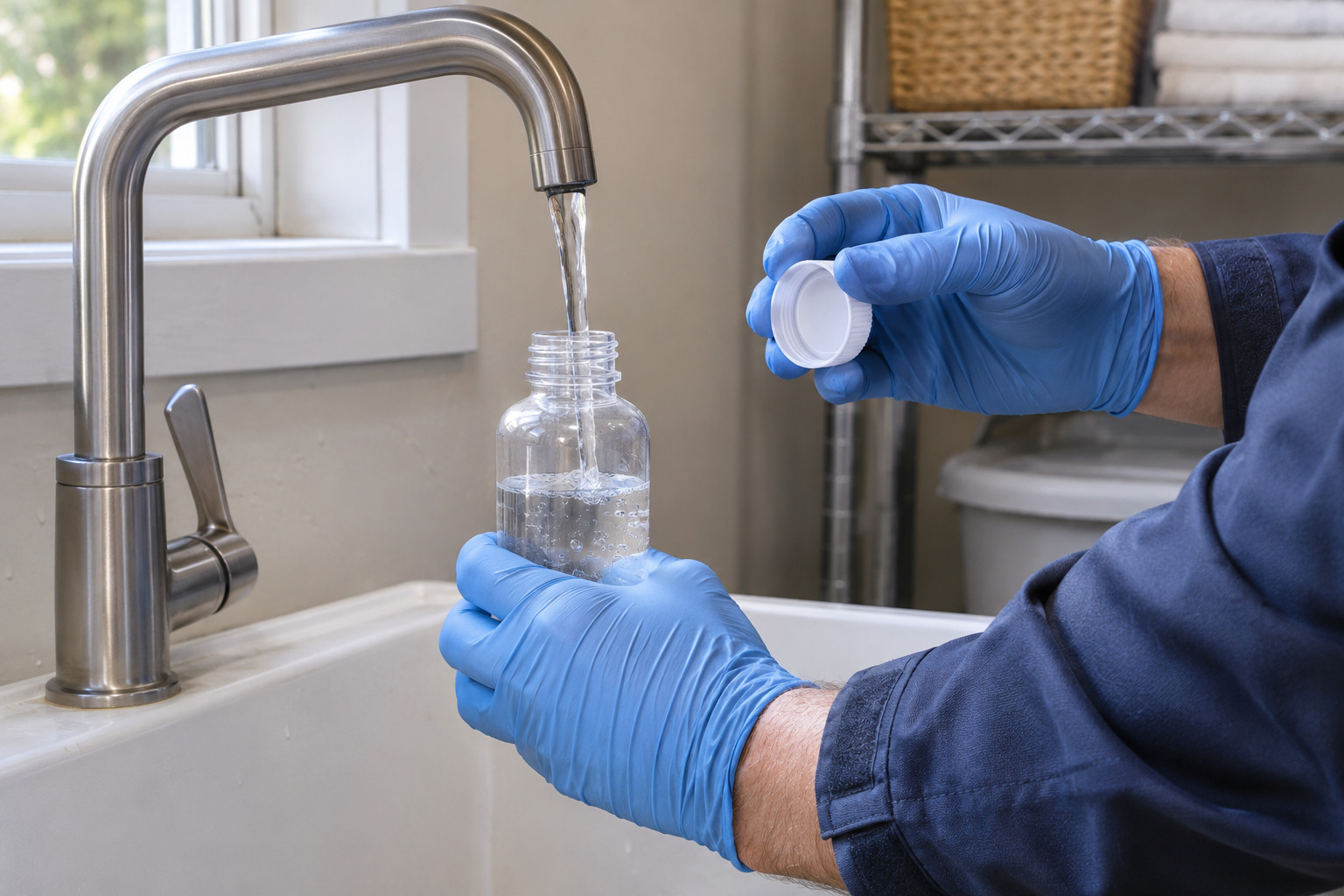
A failed water test can make a real estate transaction feel suddenly complicated. The seller wants it fixed. The buyer wants reassurance. Everyone wants the closing date to hold. Then somebody says they know a person who can shock the well.
That may be the beginning of a solution. It is not the paperwork I need to confirm the next step.
Twice in the past year, I have encountered situations where a well was treated after a failed bacterial test and the follow-up relied on a household testing-strip kit instead of proper laboratory results. This is another inspection pet peeve of mine. I want the actual lab report, not a photograph of a test strip.
As a Calvert County, Maryland Realtor, I want buyers and sellers to understand that there are separate questions here: what was done to the well, whether the water was sampled properly afterward, and what the laboratory found. One answer cannot stand in for all three.
A strip can answer the wrong question
Different home kits measure different things. A strip intended to check chlorine or pH does not establish that a sample is free of coliform bacteria or E. coli. Even a product marketed for bacterial screening is not a substitute for the appropriately collected sample and certified laboratory report needed to evaluate a failed real estate water test.
The University of Maryland Extension recommends an MDE-certified laboratory and identifies bacterial testing among routine well-water checks. Ask what organism or indicator the original test detected and order the appropriate follow-up, rather than assuming any product labeled water test covers the same ground. [1]
This is not about finding fault with a helpful friend. It is about matching the evidence to the question. If the concern was bacteria, a reassuring chlorine reading does not settle it.
Use the right laboratory credentials
The useful term in Maryland is state-certified drinking-water laboratory. MDE oversees that certification program and publishes information about laboratories and their approved tests. Check the laboratory's current certification for the particular bacterial analysis you need, not just whether the business offers testing. [2]
MDE requires certified samplers for public-water-system compliance samples and recommends certified samplers for private residential and real estate testing. That distinction matters: a recommendation for private sampling should not be described as a universal public-system regulation. For a transaction, also confirm what the contract, lender and local health department require. [2]
A contractor's invoice is useful evidence of work. A laboratory report is evidence about the sample tested. I want both when both are relevant. Neither replaces the other.
Maryland sale requirements deserve a careful read
Maryland Real Property section 10-713 requires a well-water-testing provision in covered sale contracts, receipt and review of results by both parties before settlement, and their written acknowledgment at settlement. The statute also allows the purchaser to waive its testing requirements in writing. It includes reporting duties for state-certified laboratories conducting testing to comply with the section. [3]
That waiver is a legal option, not my recommendation after a failed bacterial result. It also does not automatically remove separate lender or contract requirements. Have the applicable documents reviewed before deciding what is needed for your specific sale.
Disinfection needs a follow-up plan
Shocking a well is a disinfection treatment. It is not proof that the underlying cause has been found or that contamination will not return. Calvert County Health Department's well-owner guidance discusses disinfection after bacteria are detected and recommends involving a licensed plumber or well driller if you are not familiar or comfortable with the procedure. [4]
Before the work starts, I would want the provider, sampler and laboratory to agree on the sequence. That includes treatment, any necessary flushing, the conditions for collecting the repeat sample and the expected report date. Do not choose the sample date solely because it fits neatly before closing.
Residual disinfectant matters. Tell the laboratory when the well was treated and let the qualified sampler follow its instructions for testing conditions, collection containers, handling and delivery. A sample collected at the wrong time can fail to answer the question you intended to ask. This is why I prefer arranging the retest with the laboratory before someone announces the job is finished.
Calvert's guidance says not to use the water for drinking, cooking or food preparation until testing shows it is free of coliform bacteria. It recommends two consecutive tests at least a week apart to check for regrowth. That is local health guidance, not a promise that every purchase contract or lender uses the same timetable. Confirm the plan with the health department and laboratory. [4]

My practical checklist after a failed result
- Read the original report and identify exactly what failed. Do not settle for a verbal summary.
- Ask the qualified provider what may have caused the problem and whether repairs or further investigation are needed.
- Get the treatment or repair invoice, including the date and scope of work.
- Arrange proper repeat sampling with a laboratory certified for the required analysis.
- Confirm post-treatment timing, sampling conditions, turnaround time and any additional follow-up tests.
- Obtain the complete report and confirm the property, collection point, sample date and results are correct.
- Give the transaction team enough time to review the documents and confirm that the applicable conditions are satisfied.
My preference is to make that plan early. Waiting until the afternoon before settlement to discover that the promised report is a picture of a strip is stressful for everybody, and it does not improve the water.
Questions buyers and sellers ask me
No. Appearance is not a substitute for testing. MDE recommends periodic certified-laboratory testing for private wells, including annual sampling and additional testing when conditions suggest a problem. [5]
It addresses the organisms and sample tested, not every possible contaminant or all future conditions. Discuss the appropriate test panel with the laboratory or health department. Maryland Extension lists other concerns, including nitrate and contaminants relevant to the particular location. [1]
I would first confirm that the person is qualified for the work and that any required licensing or permits are addressed. Familiarity with the seller is not a credential. Regardless of who performs the treatment, I still want proper follow-up laboratory testing.
Bring the report back to the qualified well professional and health department for guidance. Do not keep repeating treatment simply to chase a passing result without considering the cause. The transaction may need more time for investigation and a documented solution.
Good records protect both sides
Buyers deserve reliable information about the home they are purchasing. Sellers deserve a clear plan for documenting the work they have paid for. If you are buying or selling a home with a well in Southern Maryland, I can help you organize those questions early and keep the right people involved.
Sources and further reading
- University of Maryland Extension Water Testing
- MDE Drinking Water Laboratory Certification Program
- Maryland Real Property section 10 713
- Calvert County Guide for Well Owners pages 4 and 5
- MDE Be Well Wise
Information checked November 2, 2026. General consumer education, not individual medical, legal or technical advice. Consult qualified professionals about the property and transaction.
About Dawn Riley

Dawn Riley is an Associate Broker, Realtor, Master Certified Negotiator (MCNE) and Pricing Strategy Advisor (PSA) with The Riley Team at Deep Roots Real Estate in Huntingtown, Maryland. She has more than 25 years of real estate experience and additional negotiation coursework from Yale, Northwestern, UVA, Columbia and UC Davis. Dawn combines strategic pricing, advanced marketing and detailed Maryland contract knowledge for buyers and sellers throughout Calvert County and Southern Maryland.
Career results as of 2026: 1,338+ homes sold, $532,653,786+ in sales volume and average sold-to-list price statistics over 101%, per Bright MLS career production records. Past performance does not guarantee a specific result.
Dawn Riley
Associate Broker, Realtor, MCNE, PSA
The Riley Team at Deep Roots Real Estate
2425 Solomons Island Rd., Suite C, Huntingtown, MD 20639
410-414-2438
dawn@dawnriley.net
Schedule a consultation