
Termite and Wood-Destroying Insect Inspections in Calvert County
RETURN TO BLOG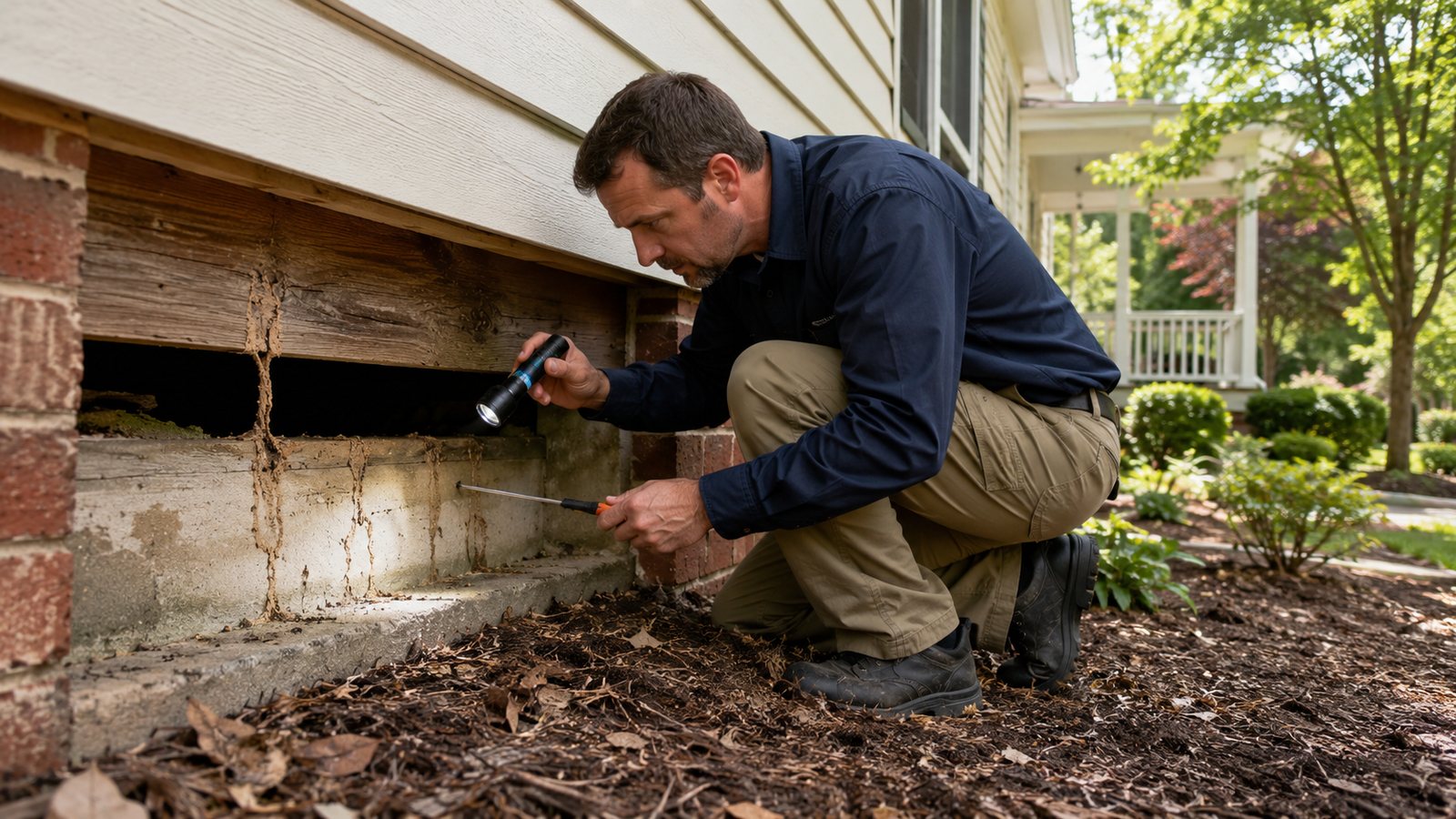
Termites work quietly, and Calvert County’s wooded lots, crawlspaces and moisture conditions can create favorable environments. A focused inspection can identify evidence that a general glance misses.
Calvert County real estate decisions work best when the local property, written contract and full financial picture are reviewed together. General guidance is a starting point, not a substitute for property-specific advice.
My approach is simple.
A wood-destroying insect report answers whether visible evidence was found in the inspected areas. It does not guarantee that every concealed cavity is clear or calculate the cost of structural repair.
Know what the report is designed to find
Maryland’s wood-destroying insect form records visible evidence of listed organisms, inaccessible areas and prior treatment signs. The inspector should be properly licensed for the work performed.
Access controls the quality of the answer
Stored belongings, insulation, finished walls, low crawlspaces and locked areas can limit inspection. Ask which spaces were inaccessible and whether access can be improved before the deadline.
Active insects and damage are separate questions
Treatment may address an active infestation. Damaged joists, sill plates or framing may require evaluation and repair by a qualified contractor or engineer. Do not treat a treatment receipt as proof that structure is sound.
Moisture correction matters
Leaks, poor grading, wood-to-soil contact and damp crawlspaces can contribute to future risk. Address the condition that supports activity, not only the insects observed that day.
Use clear contract language
Specify the report, who may perform it, the structures included and how findings will be handled. Older paint concerns may require a separate lead-paint review. If an appraisal later raises value questions, follow the process in the low-appraisal guide.
The Bottom Line
Termites work quietly, and Calvert County’s wooded lots, crawlspaces and moisture conditions can create favorable environments. A focused inspection can identify evidence that a general glance misses.
Verify the details early, keep important deadlines visible and put the final agreement in writing.
Frequently Asked Questions
No. It is a specialized visual inspection for evidence of listed wood-destroying organisms and related conditions.
No. Concealed or inaccessible areas cannot be fully evaluated by a visual inspection.
No. Pest treatment and structural repair are separate scopes of work.
If those structures matter, identify them in the inspection agreement and confirm they were inspected.
The Maryland Department of Agriculture regulates pest-control licensing and provides the state inspection form.
Let’s Build a Clear Real Estate Strategy
I will help you evaluate the property, understand the contract and negotiate with confidence.
Dawn Riley
Associate Broker, Realtor, Master Certified Negotiator
The Riley Team at Deep Roots Real Estate
410-414-2438
dawn@dawnriley.net
https://dawnriley.net/