Heating Oil Tanks and Home Sales: Records Buyers Need
RETURN TO BLOG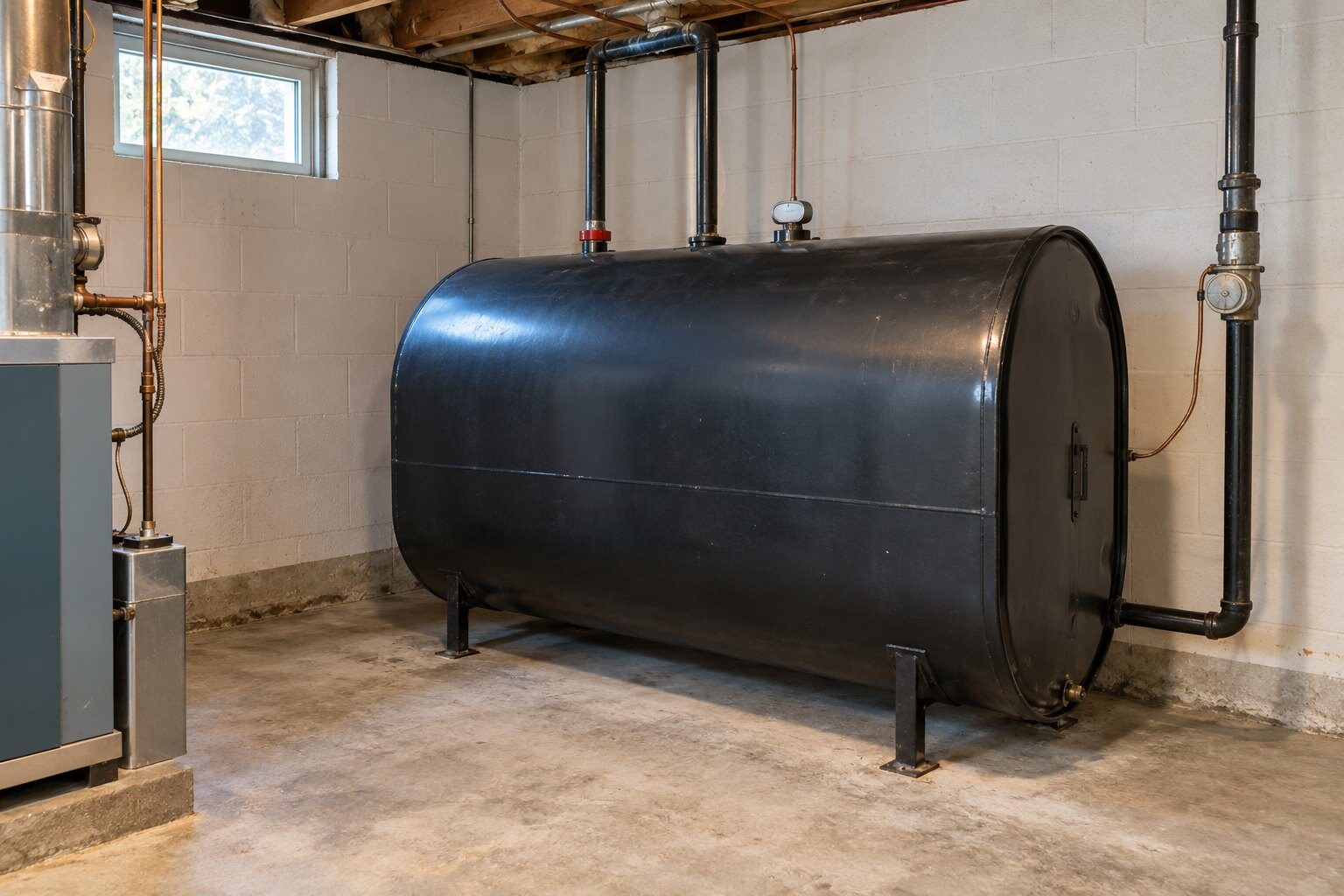
A heating-oil system is both a home mechanical system and a potential environmental issue. Buyers need to know whether a tank is aboveground or underground, active or abandoned, its age and condition, whether prior tanks were removed, and whether any release was reported and closed through the proper process.
Older Southern Maryland homes may have basement tanks, exterior tanks, underground tanks or evidence of a former oil system after conversion to heat pumps. Maryland’s Oil Control Program oversees tank installation, maintenance and removal through certified professionals. A disconnected fill pipe or patch in the foundation is a clue, not proof of a clean removal.
Dawn’s rule: Separate verified facts from assumptions. Then send each unresolved question to the professional or agency that controls the answer. A good contract strategy does not blur those roles.
Start with the property-specific question
A heating-oil system is both a home mechanical system and a potential environmental issue. Buyers need to know whether a tank is aboveground or underground, active or abandoned, its age and condition, whether prior tanks were removed, and whether any release was reported and closed through the proper process. That distinction matters because buyers and sellers often hear a shorthand answer and treat it as final. A listing description, seller memory, online map or contractor opinion can be useful, but none automatically controls title, financing, insurance, permitting or legal rights.
Older Southern Maryland homes may have basement tanks, exterior tanks, underground tanks or evidence of a former oil system after conversion to heat pumps. Maryland’s Oil Control Program oversees tank installation, maintenance and removal through certified professionals. A disconnected fill pipe or patch in the foundation is a clue, not proof of a clean removal. Dawn begins by writing down the client’s intended use, the evidence already available and the deadline for a reliable answer. That prevents research from becoming an open-ended project and keeps the parties focused on what could change price, terms or willingness to proceed.
Records buyers and sellers should collect
Documents usually reveal more than reassurance. Collect the following records early, preserve the original file names and note the source and date. If a record is missing, label it missing. Do not replace it with an assumption.
- Tank installation, replacement, inspection and service invoices
- MDE-certified removal or abandonment documentation and disposal receipts
- Release reports, sampling results, cleanup correspondence and closure documentation
- Heating service records, fuel-delivery history and tank warranty
- Insurance claims, environmental endorsements and current underwriting response
- Permits and contractor records for fuel conversion, fill and vent piping or removed equipment
These records should be read together. A permit without a final inspection, a survey without the referenced easement, or an estimate without a defined scope can create false confidence. Dawn builds one shared checklist and tracks who requested each item, when it arrived and which professional still needs to review it.
Local warning signs that deserve a closer look
- An exterior fill pipe remains but no active tank is identified
- The basement tank shows corrosion, staining, wet legs or unstable support
- A seller recalls an underground tank removal but has no contractor or sampling record
- The property has petroleum odor, stained soil or unexplained excavation
- Insurance will not bind until tank age or replacement is documented
- The parties discuss a credit before defining whether there is a release or regulatory duty
A warning sign is not proof of a defect, denial or legal violation. It is a reason to slow down and ask a narrower question. The strongest due diligence says, “Here is what we observed, here is the controlling document or agency, and here is the answer we need before this date.”
In Calvert County, rural land, waterfront, private systems and community restrictions often overlap. One professional cannot answer every layer. A contractor may estimate a repair but cannot guarantee lender acceptance. A county employee may explain permits but not interpret a private contract. A Realtor can organize the transaction but does not replace legal, engineering, insurance or tax advice.
A practical buyer checklist
- Step 1: Identify every current and former tank location with the seller and inspector. Put the result in the transaction file and decide whether it changes affordability, intended use or the offer.
- Step 2: Hire qualified professionals for tank and environmental evaluation within the contract period. Put the result in the transaction file and decide whether it changes affordability, intended use or the offer.
- Step 3: Request MDE, contractor and insurance records before assuming a removal was clean. Put the result in the transaction file and decide whether it changes affordability, intended use or the offer.
- Step 4: Ask the insurance producer about coverage and tank-age requirements. Put the result in the transaction file and decide whether it changes affordability, intended use or the offer.
- Step 5: Coordinate any sampling or removal plan with the lender and title company. Put the result in the transaction file and decide whether it changes affordability, intended use or the offer.
- Step 6: Distinguish the known tank condition from unknown soil or groundwater impacts. Put the result in the transaction file and decide whether it changes affordability, intended use or the offer.
Buyers should prioritize questions that can end the purchase, change the monthly cost or make the planned use impossible. Cosmetic preferences can wait. Title, financing, insurance, safety, legal use and expensive physical conditions cannot. The contract should preserve enough time to receive real answers rather than merely submit requests.
A practical seller checklist
- Seller action 1: Gather tank, fuel, removal and cleanup records before listing. Early documentation protects credibility and gives the seller more choices.
- Seller action 2: Have visible leaks or unstable equipment evaluated promptly. Early documentation protects credibility and gives the seller more choices.
- Seller action 3: Do not remove or abandon a tank through an unqualified contractor. Early documentation protects credibility and gives the seller more choices.
- Seller action 4: Report a discovered release as required and follow agency guidance. Early documentation protects credibility and gives the seller more choices.
- Seller action 5: Obtain a current insurance and service perspective before promising a remedy. Early documentation protects credibility and gives the seller more choices.
- Seller action 6: Price the home with documented condition rather than hiding an unused oil system. Early documentation protects credibility and gives the seller more choices.
Sellers gain leverage by solving uncertainty before a buyer turns it into a worst-case estimate. That does not mean repairing everything or agreeing with every concern. It means describing the property accurately, producing records quickly and understanding the likely cost and timing of any real issue before negotiating.
Related planning: Review Mobile, Manufactured, or Modular? How to Verify the Difference; Review Selling a Home Through a Maryland Estate or Probate; Review Radon Testing and Mitigation Before Home Settlement. These guides are designed to go live together, so the research, financing and negotiation questions connect.
How this issue can affect the transaction
| Area | Possible effect |
|---|---|
| Use | heating reliability, fuel access and conversion plans affect occupancy. |
| Financing | unresolved environmental or mechanical concerns can trigger underwriting conditions. |
| Insurance | carriers may restrict older tanks or exclude pollution-related losses. |
| Appraisal | functional utility and known contamination can affect condition and marketability. |
| Title | environmental obligations can survive a casual private agreement. |
| Seller net | tank replacement, removal, testing and remediation range from routine to substantial. |
| Deadlines | certified contractors, sampling and agency review may exceed a short inspection period. |
Not every possible effect will apply. The purpose of the table is to prevent tunnel vision. A buyer may solve a physical concern and still have a lender problem. A seller may agree to a credit and still lack insurable title or carrier approval. Each lane must reach its own answer.
Who should answer each part?
| Professional | What that professional should answer |
|---|---|
| Dawn Riley and the real estate team | Organize documents, identify contract deadlines, coordinate questions, compare offer terms and keep advice from each licensed professional in the correct lane. |
| Title company or real estate attorney | Review recorded instruments, ownership, liens, deed language, settlement charges and legal questions. Only an attorney should give legal advice. |
| Lender and appraiser | Decide loan eligibility, underwriting treatment, valuation requirements and documentation. A real estate agent cannot approve financing or direct an appraisal result. |
| Inspector, engineer or specialty contractor | Evaluate physical conditions within the professional scope and explain repair options. A general home inspection does not replace engineering or environmental review. |
| Insurance producer | Confirm whether coverage is available, what it costs, which exclusions apply and what underwriting records are required. |
Dawn’s job is to make sure the correct question reaches the correct professional before the relevant decision date. She can explain the Maryland contract process, organize evidence and negotiate terms. She will not present a guess as a legal, underwriting, engineering, appraisal, insurance or tax conclusion.
A realistic Southern Maryland transaction example
An older Owings home has a newer heat pump, but two capped pipes remain beside the driveway. Dawn does not describe them as an abandoned tank with no problem. She requests conversion and removal records, has the buyer’s inspector document the evidence, and coordinates a qualified tank-location and environmental review before the contract deadline.
This example is illustrative, not a prediction. Property facts, contract language and professional decisions vary. What remains consistent is the method: identify the uncertainty, obtain the controlling evidence, calculate the effect and decide before leverage disappears.
How Dawn organizes the contract and negotiation strategy
Dawn separates three questions: Is there a tank? Is it structurally serviceable? Was there a release? Each requires different evidence and professionals. A fixed credit may work for a known replacement cost, but it is risky when environmental scope is unknown. Any removal or remediation agreement needs contractor qualifications, reporting, sampling, completion documents and a clear deadline.
Dawn Riley brings more than 25 years of Maryland real estate experience, detailed contract knowledge and Master Certified Negotiator training to that process. Her career includes 1,338+ sales and more than $532,653,786 in volume, with average sold-to-list statistics over 101%. Those numbers do not guarantee a result. They support a disciplined approach to pricing, documentation and negotiation.
Common mistakes to avoid
The first mistake is treating a verbal answer as a permanent fact. The second is asking the wrong professional to guarantee an outcome outside that person’s authority. The third is waiting until settlement week, when moving plans, rate locks and emotions make clear decisions harder.
Another mistake is assuming a credit cures everything. Money can address a known cost, but it does not create a permit, change a title right, make a lender approve the loan or force an insurer to issue coverage. The remedy must match the actual problem.
The Bottom Line
A heating-oil system is both a home mechanical system and a potential environmental issue. Buyers need to know whether a tank is aboveground or underground, active or abandoned, its age and condition, whether prior tanks were removed, and whether any release was reported and closed through the proper process. Collect the records, identify the controlling authority, calculate the transaction impact and protect the deadline. Buyers deserve enough evidence to make an informed decision. Sellers deserve a strategy that does not discount the property simply because information was disorganized.
Frequently Asked Questions
Yes, Maryland’s Oil Control Program has requirements and guidance for storage tanks, certified removers and reporting releases. The exact obligations depend on tank type, size and facts.
Records, visible fill or vent pipes, utility history, inspection and specialized locating methods can help. No single clue is always conclusive.
Requirements depend on the tank and condition. Maryland strongly recommends replacing older underground residential tanks, and removal must use an MDE-certified professional. Obtain property-specific guidance.
Maryland law and regulations can require the owner and contractor to report a discovered release. The qualified contractor and MDE should guide immediate steps.
Usually not. A general inspector may note visible evidence, but tank testing, soil sampling and cleanup assessment require specialized professionals.
Coverage varies widely by policy, endorsement and circumstances. Buyers and sellers should ask their licensed producers in writing before relying on coverage.
Only when the scope is known and lender and insurer accept the plan. A credit for a tank does not resolve unknown contamination or regulatory obligations.
Look for the certified contractor’s invoice, disposal record, site photographs, sampling results, release reporting and agency closure or related correspondence when applicable.
Yes, but the old tank and piping still need proper closure, and the new system requires permits and documentation. Conversion does not erase prior environmental questions.
Stop guessing and contact qualified professionals. Preserve evidence, follow safety guidance, determine whether reporting is required and protect the transaction deadline.
About Dawn Riley

Dawn Riley is an Associate Broker, Realtor, Master Certified Negotiator (MCNE) and Pricing Strategy Advisor (PSA) with The Riley Team at Deep Roots Real Estate in Huntingtown, Maryland. She has more than 25 years of real estate experience and additional negotiation coursework from Yale, Northwestern, UVA, Columbia and UC Davis. Dawn combines strategic pricing, advanced marketing and detailed Maryland contract knowledge for buyers and sellers throughout Calvert County and Southern Maryland.
Career results as of 2026: 1,338+ homes sold, $532,653,786+ in sales volume and average sold-to-list price statistics over 101%, per Bright MLS career production records. Past performance does not guarantee a specific result.
Dawn Riley
Associate Broker, Realtor, MCNE, PSA
The Riley Team at Deep Roots Real Estate
2425 Solomons Island Rd., Suite C, Huntingtown, MD 20639
410-414-2438
dawn@dawnriley.net
Schedule a consultation