Mobile, Manufactured, or Modular? How to Verify the Difference
RETURN TO BLOG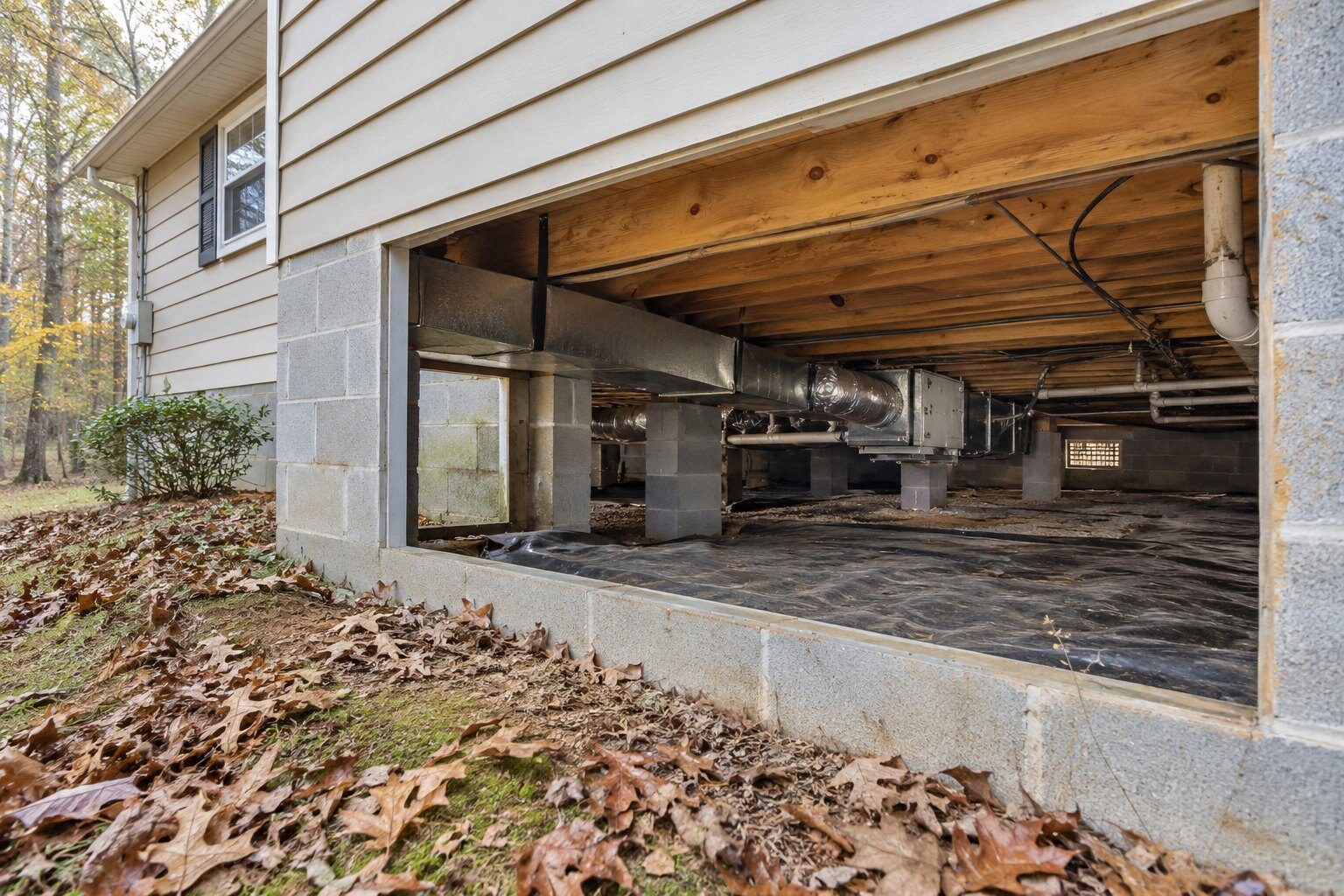
A pre-1976 mobile home and a Maryland-regulated modular home may look similar after renovations, but they are different construction categories. That distinction can change financing, appraisal, insurance, title treatment and resale. Because this Huntingtown home is reported as built in 1974—before federal HUD standards and certification labels took effect on June 15, 1976—the absence of a HUD tag would not decide the question.
A block foundation is useful evidence but not proof of modular construction. A conventional loan reported in May 2024 does not bind a new lender or establish type. An HVAC brand may date later equipment but cannot classify the original dwelling. The crawlspace may reveal a steel chassis, crossmembers, hitch remnants, marriage-line framing, modular floor framing or later support work; those observations still must be reconciled with permits, Maryland insignia or manufacturer records, title documents and the prior appraisal.
Why I am researching this question right now
I was preparing to work with a buyer considering 3730 Hunting Creek Rd. in Huntingtown. The tax record reports 1974. The listing data uses “Manufactured Home” as the subtype and “Modular/Pre-Fabricated” as the style. The description highlights the country and equestrian setting, recent flooring, roof and gutters, and a well pump, but it does not establish construction type. MLS photos show a block foundation. The crawlspace will be open for inspection, and I requested the original County permits. Those facts create a research plan—not a verdict. I am not criticizing or speculating about the listing agent’s experience.
Dawn’s rule: Separate verified facts from assumptions. Then send each unresolved question to the professional or agency that controls the answer. A good contract strategy does not blur those roles.
Start with the property-specific question
For this home, the classification question must be resolved through a disciplined comparison of the accessible framing and chassis evidence with the original permits, state or manufacturer identifiers, title history, prior appraisal and the current lender’s requirements. No single clue should be promoted into a conclusion.
Records buyers and sellers should collect
Documents usually reveal more than reassurance. Collect the following records early, preserve the original file names and note the source and date. If a record is missing, label it missing. Do not replace it with an assumption.
- Original Calvert County building, installation, electrical, plumbing, septic and occupancy permits, including plans and inspection notes
- The May 2024 appraisal and any lender property-classification conditions, while recognizing that a prior loan decision does not control the next loan
- Maryland industrialized or modular insignia information, serial numbers, manufacturer name, data plates, invoices or transport records
- Current deed, title search and any historical certificate of title, lien release, affixation or conversion-to-real-property documentation
- Crawlspace photographs showing beams, joists, steel longitudinal members, crossmembers, piers, block walls, anchoring and utility penetrations
- HVAC rating plates, duct layout, roof framing, additions and renovation permits as secondary clues that must be dated and placed in context
These records should be read together. A permit without a final inspection, a survey without the referenced easement, or an estimate without a defined scope can create false confidence. Dawn builds one shared checklist and tracks who requested each item, when it arrived and which professional still needs to review it.
Local warning signs that deserve a closer look
- A database field calls the home manufactured while another field calls it modular or prefabricated
- Someone treats the block foundation, exterior shape or conventional mortgage as conclusive proof
- No original permit or state insignia record has been located for a reported 1974 factory-built dwelling
- The crawlspace cannot be fully viewed at the inspection or additions conceal the original frame
- A serial number, state insignia or appraisal classification conflicts with the current listing or tax record
- The buyer’s lender is asked to approve the home before receiving the classification evidence
A warning sign is not proof of a defect, denial or legal violation. It is a reason to slow down and ask a narrower question. The strongest due diligence says, “Here is what we observed, here is the controlling document or agency, and here is the answer we need before this date.”
In Calvert County, rural land, waterfront, private systems and community restrictions often overlap. One professional cannot answer every layer. A contractor may estimate a repair but cannot guarantee lender acceptance. A county employee may explain permits but not interpret a private contract. A Realtor can organize the transaction but does not replace legal, engineering, insurance or tax advice.
A practical buyer checklist
- Step 1: Give the lender the 1974 date and conflicting listing fields before spending heavily on inspections or appraisal. Put the result in the transaction file and decide whether it changes affordability, intended use or the offer.
- Step 2: Obtain written guidance about whether the proposed conventional program can finance a pre-HUD mobile home, a modular home or only certain factory-built categories. Put the result in the transaction file and decide whether it changes affordability, intended use or the offer.
- Step 3: Make the crawlspace inspection a priority and ask the inspector to photograph accessible steel members, crossmembers, support systems and framing without declaring a legal classification beyond the evidence. Put the result in the transaction file and decide whether it changes affordability, intended use or the offer.
- Step 4: Request original County permits, the 2024 appraisal, manufacturer or state insignia records and any historical title documentation. Put the result in the transaction file and decide whether it changes affordability, intended use or the offer.
- Step 5: Ask the appraiser and lender to reconcile the verified construction category with comparable selection, property eligibility and appraisal reporting. Put the result in the transaction file and decide whether it changes affordability, intended use or the offer.
- Step 6: Preserve a meaningful due-diligence and financing timeline so the buyer can act if the evidence stays incomplete or the loan program changes. Put the result in the transaction file and decide whether it changes affordability, intended use or the offer.
Buyers should prioritize questions that can end the purchase, change the monthly cost or make the planned use impossible. Cosmetic preferences can wait. Title, financing, insurance, safety, legal use and expensive physical conditions cannot. The contract should preserve enough time to receive real answers rather than merely submit requests.
A practical seller checklist
- Seller action 1: Gather the original permit packet, prior appraisals, settlement papers, loan records and any manufacturer or modular documentation before marketing. Early documentation protects credibility and gives the seller more choices.
- Seller action 2: Describe the construction type only as strongly as the records support and disclose conflicting public or listing information. Early documentation protects credibility and gives the seller more choices.
- Seller action 3: Provide safe crawlspace access and permission for appropriate photographs during inspection. Early documentation protects credibility and gives the seller more choices.
- Seller action 4: Ask the title company to research any former mobile-home title, affixation or lien history when relevant. Early documentation protects credibility and gives the seller more choices.
- Seller action 5: Allow the buyer’s lender and appraiser to make their own current program decisions rather than relying on the 2024 conventional closing. Early documentation protects credibility and gives the seller more choices.
- Seller action 6: If evidence remains mixed, price and negotiate around documented uncertainty instead of offering an unsupported guarantee. Early documentation protects credibility and gives the seller more choices.
Sellers gain leverage by solving uncertainty before a buyer turns it into a worst-case estimate. That does not mean repairing everything or agreeing with every concern. It means describing the property accurately, producing records quickly and understanding the likely cost and timing of any real issue before negotiating.
Related planning: Review Selling a Home Through a Maryland Estate or Probate; Review Radon Testing and Mitigation Before Home Settlement; Review Property Surveys, Boundary Lines, and Encroachments. These guides are designed to go live together, so the research, financing and negotiation questions connect.
How this issue can affect the transaction
| Area | Possible effect |
|---|---|
| Use | construction category may affect renovation planning, additions, support systems and future permitting. |
| Financing | Fannie Mae and Freddie Mac manufactured-housing programs generally require a HUD-Code home built on or after June 15, 1976, while modular homes follow different eligibility treatment; portfolio lenders may have separate policies. |
| Insurance | carriers may ask for construction type, age, foundation and title status before binding coverage. |
| Appraisal | the appraiser needs the correct property type, credible comparables and lender instructions; the 2024 appraisal is evidence, not automatic authority. |
| Title | an older mobile home may have certificate-of-title or affixation questions that a title professional must resolve. |
| Marketability | a verified modular classification can produce a different buyer and lender pool than unresolved or pre-HUD mobile-home status. |
| Negotiation | the parties need a written evidence deadline and a remedy if classification or financing cannot be confirmed. |
Not every possible effect will apply. The purpose of the table is to prevent tunnel vision. A buyer may solve a physical concern and still have a lender problem. A seller may agree to a credit and still lack insurable title or carrier approval. Each lane must reach its own answer.
Who should answer each part?
| Professional | What that professional should answer |
|---|---|
| Dawn Riley and the real estate team | Organize documents, identify contract deadlines, coordinate questions, compare offer terms and keep advice from each licensed professional in the correct lane. |
| Title company or real estate attorney | Review recorded instruments, ownership, liens, deed language, settlement charges and legal questions. Only an attorney should give legal advice. |
| Lender and appraiser | Decide loan eligibility, underwriting treatment, valuation requirements and documentation. A real estate agent cannot approve financing or direct an appraisal result. |
| Inspector, engineer or specialty contractor | Evaluate physical conditions within the professional scope and explain repair options. A general home inspection does not replace engineering or environmental review. |
| Insurance producer | Confirm whether coverage is available, what it costs, which exclusions apply and what underwriting records are required. |
Dawn’s job is to make sure the correct question reaches the correct professional before the relevant decision date. She can explain the Maryland contract process, organize evidence and negotiate terms. She will not present a guess as a legal, underwriting, engineering, appraisal, insurance or tax conclusion.
A realistic Southern Maryland transaction example
At 3730 Hunting Creek Rd., I would not tell my buyer that the block foundation proves modular construction or that a missing HUD tag proves ineligible manufactured housing. The 1974 date predates the federal label requirement. My next steps are to inspect the crawlspace, photograph the frame, obtain County permits and request the prior appraisal, insignia, manufacturer and title records. Then the lender, appraiser, inspector, title professional and—if needed—an engineer can reconcile the evidence within their scopes.
This example is illustrative, not a prediction. Property facts, contract language and professional decisions vary. What remains consistent is the method: identify the uncertainty, obtain the controlling evidence, calculate the effect and decide before leverage disappears.
How Dawn organizes the contract and negotiation strategy
I would write the due-diligence calendar around the unanswered classification question. The buyer needs time to inspect the crawlspace, receive permits and prior records, and obtain the lender’s written eligibility answer. If the evidence shows modular construction, the file should document why. If it shows a pre-HUD mobile home, the buyer can ask about portfolio financing rather than assume agency eligibility. If evidence remains inconclusive, the buyer must decide whether the financing, appraisal and resale uncertainty is acceptable. Physical inspection is necessary here, but not invariably conclusive by itself.
Dawn Riley brings more than 25 years of Maryland real estate experience, detailed contract knowledge and Master Certified Negotiator training to that process. Her career includes 1,338+ sales and more than $532,653,786 in volume, with average sold-to-list statistics over 101%. Those numbers do not guarantee a result. They support a disciplined approach to pricing, documentation and negotiation.
Common mistakes to avoid
The first mistake is treating a verbal answer as a permanent fact. The second is asking the wrong professional to guarantee an outcome outside that person’s authority. The third is waiting until settlement week, when moving plans, rate locks and emotions make clear decisions harder.
Another mistake is assuming a credit cures everything. Money can address a known cost, but it does not create a permit, change a title right, make a lender approve the loan or force an insurer to issue coverage. The remedy must match the actual problem.
The Bottom Line
A pre-1976 mobile home and a Maryland-regulated modular home may look similar after renovations, but they are different construction categories. That distinction can change financing, appraisal, insurance, title treatment and resale. Because this Huntingtown home is reported as built in 1974—before federal HUD standards and certification labels took effect on June 15, 1976—the absence of a HUD tag would not decide the question. Collect the records, identify the controlling authority, calculate the transaction impact and protect the deadline. Buyers deserve enough evidence to make an informed decision. Sellers deserve a strategy that does not discount the property simply because information was disorganized.
Frequently Asked Questions
No. The date raises an important question because it predates the June 15, 1976 federal HUD Code, but modular and other factory-built construction also existed. Original permits, framing, state insignia, manufacturer records and title history must be reconciled.
No. A mobile or manufactured unit can be placed on or surrounded by masonry supports, while a modular home also may sit on a conventional foundation. The foundation is evidence, but the chassis, framing and records matter.
No. HUD certification labels apply to transportable manufactured-home sections produced after June 15, 1976. A home reported as built in 1974 would predate that requirement, so the missing tag alone does not classify it.
Photographs of longitudinal steel chassis members, crossmembers, outriggers, axles or hitch remnants, marriage-line framing, wood floor systems, piers, block walls, anchors and later additions can be useful. An inspector or engineer should explain what is visible and what remains concealed.
Usually not by itself. Equipment may have been replaced decades after construction. Duct routing and rating plates can be secondary clues, but original permits, framing, insignia and manufacturer records carry more weight.
No. It shows that a prior transaction closed with a particular lender and file, but the new lender must apply its current program rules to the current evidence. The prior appraisal and underwriting records may still be very useful.
Fannie Mae states that modular, prefabricated, panelized and sectional housing is not considered manufactured housing for its manufactured-home rules. A dwelling built on a permanent chassis is treated as manufactured housing and must meet the applicable eligibility requirements.
Freddie Mac’s current guide requires an eligible manufactured home to have been built on or after June 15, 1976 and on a permanent chassis, among other requirements. The buyer’s lender must confirm the complete current rule and any overlays.
Possibly. Portfolio lenders may keep a loan instead of selling it to Fannie Mae or Freddie Mac and may use different criteria. Availability, rate, down payment, appraisal and title requirements must be verified directly with the lender.
The construction type is unresolved. The responsible answer is to gather the County permits, inspect accessible framing and chassis evidence, request prior appraisal and title records, search for Maryland insignia or manufacturer data, and obtain the current lender’s written decision.
About Dawn Riley

Dawn Riley is an Associate Broker, Realtor, Master Certified Negotiator (MCNE) and Pricing Strategy Advisor (PSA) with The Riley Team at Deep Roots Real Estate in Huntingtown, Maryland. She has more than 25 years of real estate experience and additional negotiation coursework from Yale, Northwestern, UVA, Columbia and UC Davis. Dawn combines strategic pricing, advanced marketing and detailed Maryland contract knowledge for buyers and sellers throughout Calvert County and Southern Maryland.
Career results as of 2026: 1,338+ homes sold, $532,653,786+ in sales volume and average sold-to-list price statistics over 101%, per Bright MLS career production records. Past performance does not guarantee a specific result.
Dawn Riley
Associate Broker, Realtor, MCNE, PSA
The Riley Team at Deep Roots Real Estate
2425 Solomons Island Rd., Suite C, Huntingtown, MD 20639
410-414-2438
dawn@dawnriley.net
Schedule a consultation